Best Supplement Brand: How to Choose One You Can Actually Trust
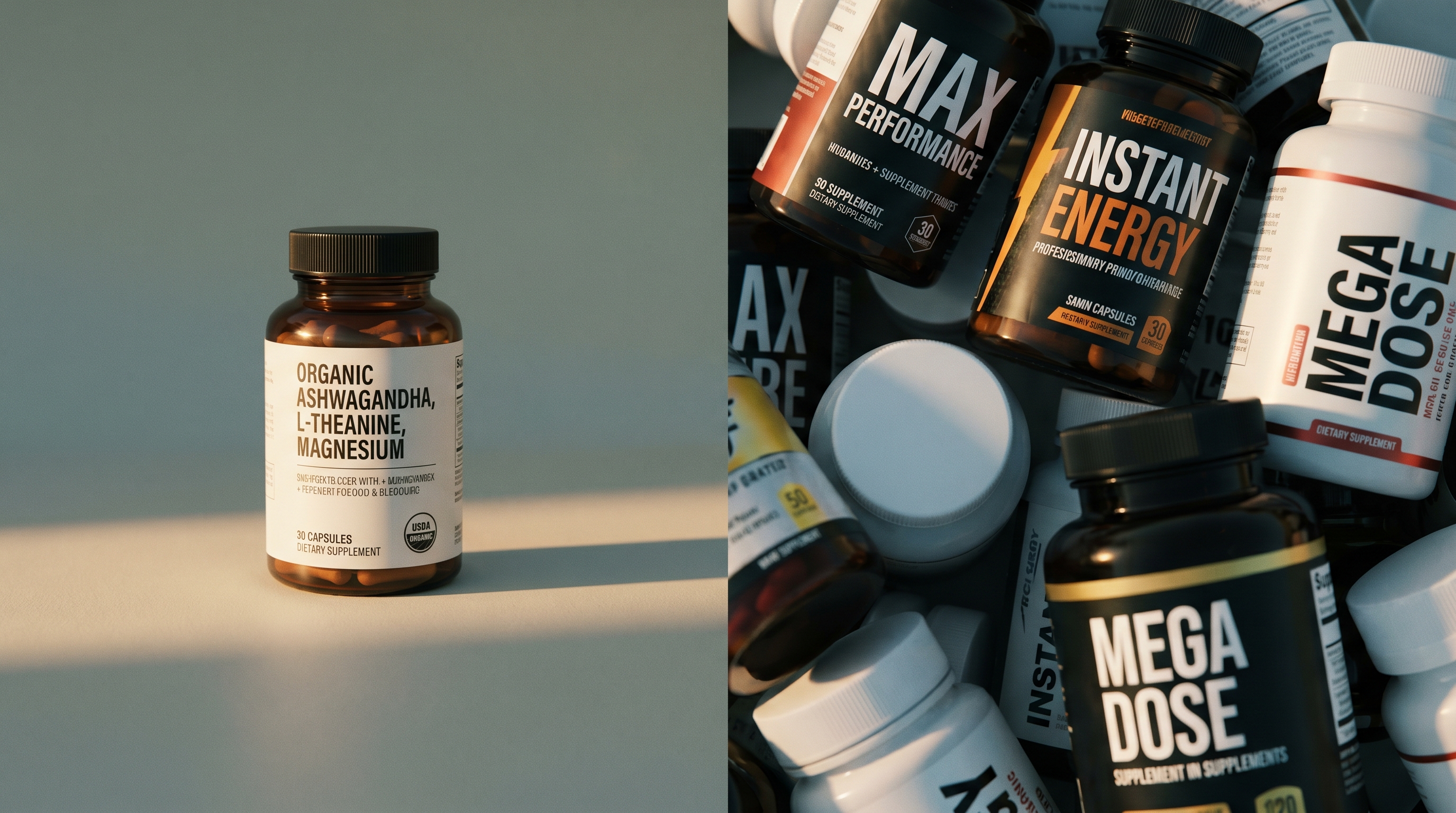
Published: June 2025 | Last Updated: June 2025 Reviewed by the Vital Editorial Team
Best Supplement Brand: How to Choose One You Can Actually Trust
The best supplement brands share four verifiable traits: third-party testing (NSF, USP, or Informed Sport certified), fully transparent dosing with no proprietary blends, clinically relevant ingredient amounts, and cGMP-certified manufacturing. Brands like Thorne, Ritual, and Vital consistently meet these standards — most others don't.
That bar matters more than it might seem. The supplement industry is one of the least regulated spaces in consumer health. Unlike pharmaceuticals, supplements don't require FDA approval before they hit shelves. Manufacturers are largely responsible for ensuring their own products are safe and accurately labeled — and not all of them do the job well.
Independent lab testing has repeatedly exposed the gap between label and reality. A 2023 ConsumerLab.com annual review found that up to 20% of supplements tested failed to meet label claims for potency or purity. That means you could be paying for a product that delivers less than advertised — or in some cases, contains ingredients that shouldn't be there at all.
This isn't about fear. It's about making an informed choice. The best supplement brand for you isn't necessarily the one with the most compelling marketing — it's the one that can prove what's inside the bottle, at the dose that actually works. That distinction matters for your health and your wallet.
What to Look for in a Supplement Brand
Not all supplement brands are cut from the same cloth. These are the criteria that separate genuinely trustworthy brands from the noise.
Third-Party Testing
Look for certifications from NSF Certified for Sport, USP Verified, or Informed Sport. These aren't self-reported claims — they mean an independent laboratory has verified that what's on the label is actually in the product, at the stated potency, without dangerous contaminants. If a brand can't point to third-party verification, that's worth noting.
Transparent Labeling
Avoid brands that hide ingredient doses inside "proprietary blends." A proprietary blend lists a group of ingredients under one combined weight — you have no way of knowing how much of each ingredient you're actually getting. Transparent brands show every ingredient with its individual dose, clearly.
For a deeper look at how to read a supplement label, our guide to what to look for in a daily multivitamin breaks it down section by section.
Clinically Relevant Dosages
An ingredient is only useful if it's dosed at a level that peer-reviewed research has shown to be effective. Many brands include popular ingredients in token amounts — just enough to put them on the label. The best supplement brands dose for results, not for appearances.
Clean Ingredient Lists
Fillers, artificial colors, unnecessary binders — these are signs a brand is cutting corners. The fewer the additives, the better.
cGMP Manufacturing
Current Good Manufacturing Practice (cGMP) certification means the facility producing the supplement meets FDA standards for quality control and consistency. It's a baseline, but an important one.
"I spent years buying supplements that looked great on the label but never felt like they were doing anything. Switching to a third-party tested brand was the first time I actually noticed a difference." — Jamie R., 34
Vital is built around all of these criteria. It's not a differentiator tacked on for marketing — it's how the product was designed from the beginning.
How the Best Supplement Brands Compare
Honest comparison is more useful than brand cheerleading. Here's how five well-known brands stack up across the criteria that matter.
| Brand | Third-Party Tested | Transparent Dosing | Clean Ingredients | Price Point | Best For |
|---|---|---|---|---|---|
| Thorne | Yes (NSF Certified) | Yes | Yes | High ($30-60+/month) | Targeted therapeutic use |
| Garden of Life | Yes (NSF, Informed Sport) | Yes | Yes (certified organic) | Mid-High | Plant-based/whole-food focus |
| AG1 (Athletic Greens) | Yes | Partial (proprietary blend) | Mostly | Very High ($79+/month) | Convenience-first |
| Ritual | Yes | Yes | Yes | Mid ($30-35/month) | Minimalist, traceable sourcing |
| Vital | Yes | Yes | Yes | Accessible ($24.50/month) | Everyday foundational health |
Thorne is a strong clinical-grade choice, particularly for people working with a practitioner on specific health goals. The quality is high; so is the price.
Garden of Life suits those who prioritize certified organic, whole-food sourced nutrition above all else. The product range is wide and the certifications are solid.
AG1 is convenient and well-marketed. The price point is significant, and the proprietary blend means full transparency isn't there — though it does carry third-party certification.
Ritual earns trust through ingredient traceability and clean design. The product range is narrower, which can be a limitation for those wanting comprehensive daily coverage.
Vital takes the all-in-one approach with clinical dosing, third-party testing, and a clean label — at a price point that makes daily use genuinely sustainable.
If Vital's approach matches what you're looking for, View the Full Formula and Ingredients.
Red Flags to Watch Out For
Knowing what to avoid is as useful as knowing what to seek. Here are the warning signs that a supplement brand may not meet the standard you deserve.
- Proprietary blends with no individual dosing. If you can't see exactly how much of each ingredient you're getting, you can't assess whether it will actually work.
- Extreme claims with no clinical support. "10,000% Daily Value of Vitamin C" is not a sign of superiority — it's a sign of poor formulation judgment.
- No third-party certification listed on the label or website. Any reputable brand will make this information easy to find.
- Health claims that sound too good to be true. The FDA prohibits disease claims on supplements. Brands that imply their products cure or prevent medical conditions are operating outside the rules.
- No manufacturing location or cGMP certification. Where and how a supplement is made matters.
- Influencer-heavy marketing with no scientific advisory board or formulation transparency. Marketing spend is not a proxy for product quality.
To understand how certifications like NSF and USP are awarded and what they actually verify, our guide to how supplements are regulated and tested covers the process in full.
What Makes Vital Different
Most people don't need a cabinet full of supplements. They need one product that covers the foundations — reliably, cleanly, and without complexity.
Vital's All-In-One Daily Multi Nutrient is built for exactly that. One product. Clinically relevant doses. No proprietary blends. Third-party tested for purity and potency. No artificial colors, fillers, or additives that have no place in a supplement you're taking every day.
The formulation isn't designed to impress biohackers chasing marginal gains. It's designed for real people who want to do the basics well — and then get on with their day.
At $24.50/month, it's also priced to be a genuine daily habit, not an aspirational purchase that gets abandoned after the first bottle.
If you want to see exactly what's inside — every ingredient, every dose — the formula is fully transparent. No guesswork required.
If you're ready to simplify your daily routine with a supplement built around transparency and clinical integrity, View the Full Formula and Ingredients. Or if you'd prefer to go deeper on what the research says about each ingredient, explore the science behind the formulation.

Vital All-In-One Daily Multi Nutrient
Take your health to the next level with Vital All-In-One. This nutrient-dense daily supplement is packed with 78 natural ingredients. From greens and superfoods to probiotics, vitamins and minerals, i
$24.5
Shop NowFrequently Asked Questions
What is the best supplement brand?
The best supplement brand is one that meets four verifiable standards: independent third-party testing (NSF, USP, or Informed Sport), fully transparent dosing with no proprietary blends, clinically relevant ingredient amounts, and cGMP-certified manufacturing. By those criteria, Thorne and Vital consistently rank among the most credible options. The right choice depends on your goals — Thorne skews toward clinical and therapeutic use, while Vital is designed for accessible, everyday foundational nutrition.
How do I know if a supplement brand is legit?
Start with three checks. First, look for third-party certifications (NSF Certified for Sport, USP Verified, or Informed Sport) — these are independently verified and hard to fake. Second, look for full label transparency: every ingredient with its individual dose listed, no proprietary blends. Third, confirm the product is manufactured in a cGMP-certified facility. If a brand can show all three, it's operating at a credible standard.
Is it worth paying more for a premium supplement brand?
Sometimes — but the premium needs to be justified by substance, not positioning. Higher cost is worth it when it buys you third-party certification, clinically dosed ingredients, and clean manufacturing. It's not worth it when you're paying for influencer partnerships, premium packaging, or vague "proprietary formulas." Run the criteria check first, then assess the price. You'll often find that rigorous quality doesn't have to mean the highest price point.
What supplement brands are third-party tested?
The most widely recognized third-party tested supplement brands include Thorne (NSF Certified for Sport), Garden of Life (NSF and Informed Sport), Ritual, and Vital. Third-party testing through organizations like NSF, USP, and Informed Sport means an independent lab has verified ingredient identity, potency, and the absence of harmful contaminants. Always look for the certification seal directly on the product label or the brand's website — not just a claim that testing was done.
Can one supplement cover all my daily nutritional needs?
A well-formulated all-in-one supplement can cover foundational daily nutrition effectively — the essential vitamins, minerals, and key nutrients most people don't consistently get from diet alone. What it won't do is replace a varied whole-food diet or address highly specific therapeutic needs that require targeted, high-dose interventions. For most people who eat reasonably well and want reliable daily coverage, a quality all-in-one like Vital's Daily Multi Nutrient is a practical and sufficient foundation. For specific health goals around energy, immunity, or recovery, our guide to targeted supplementation can help you assess whether additional support makes sense.